Peoples of Aporia
Art by Mikael Modeen
Peoples are social factions in the world of Aporia.
Every character is a member of one People. Your People are found family, social support, and profession all rolled into one group. They shape your character’s identity and growth opportunities.

Adder's Hand

Banu al-Rih

Banu Asrar

Baraqin

Circle of a Thousand Threads

Dar Alnahr

Dwarven Labor Union

Gardeners of the Mycelial Memories
Guardians of the Vault
Hammerbound

Hoardkeepers

Hollowed
Illuminated Petal

Kinship of the Chimes of Harmony

Royal Society of Zahra

Ruwad al-Mahjur

Stormshapers Collective

Veiled Chamber
Art by Mikael Modeen
Adder’s Hand
Most believe relics should be used to advance Aporia, regardless of the cost of taking them.
You see who has paid the price.
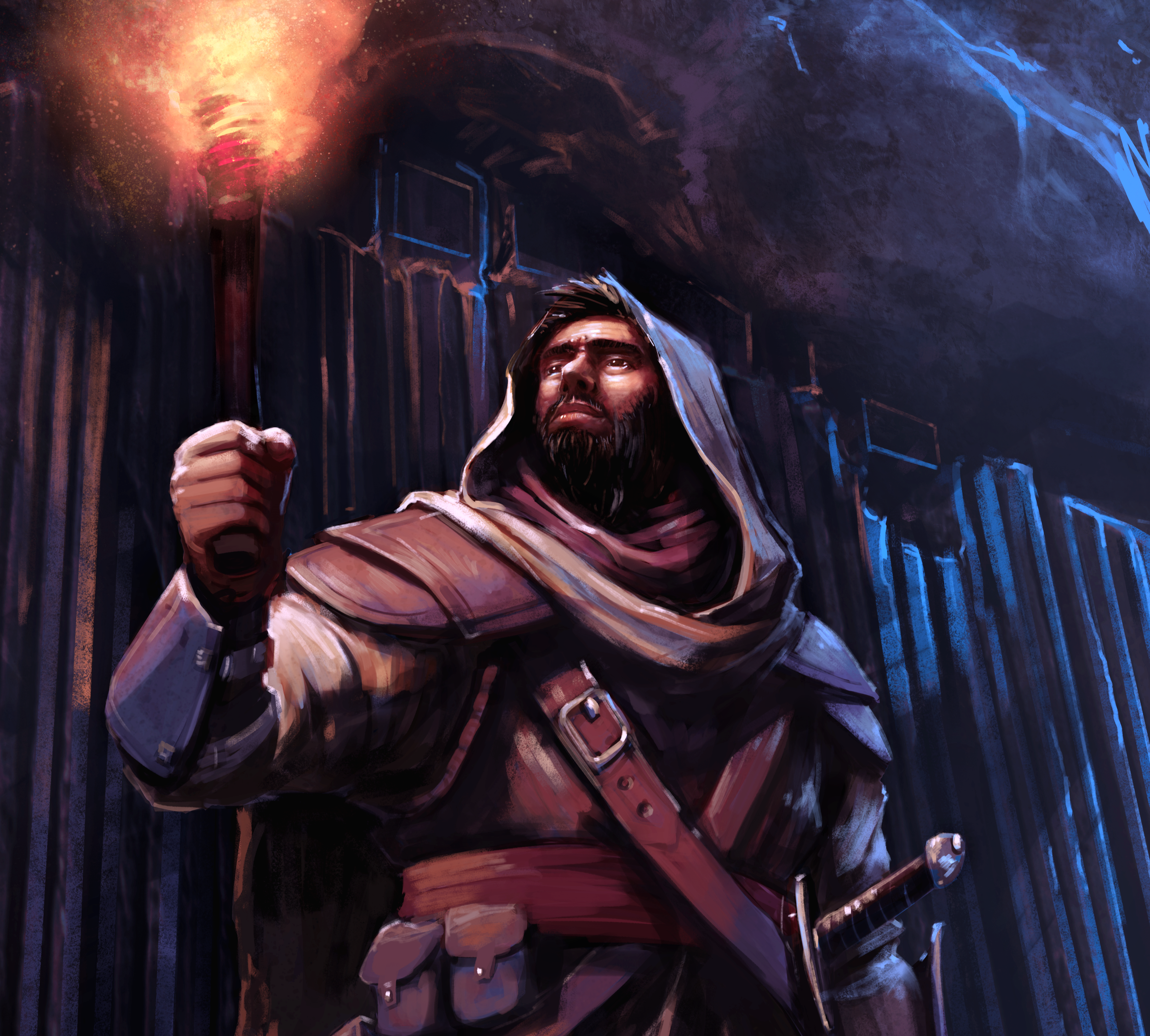
The Adder’s Hand exists for those who understand the truth of how relics arrive in Zahra. They’re not handed over to factions willingly. They’re taken, bought, coerced from the gasps of their rightful owners. Many were brought to the city of flowers by desperate refugees fleeing their dying lands. But many were pilfered, scavenged, and traded for profit and renown.
History might remember the relics brought to the Grand Library, but you remember what was lost.
You are driven by the desire to restore balance without spectacle. You work in the shadows, your influence far greater than the Peoples of Zahra realize.
Members of the Adder’s Hand move seamlessly through networks within the Grand Library with allegiances all over Aporia. They follow the origins of artifacts, listen to the stories that were never recorded through official ledgers. They understand what has been lost and strive to restore it.
Their work takes time and discretion, which many other factions within Zahra’s walls might lack. They do not seek fame, renown, or even gratitude. They move quietly, understanding that building trust takes time. They do not simply remove an artifact from a shelf and hand it over.
You don’t believe the city can preserve knowledge while willfully ignoring the communities that created the relics brought to its heart. Many others believe returning relics is surrender. You know that it’s merely recognizing the world is larger and more important than any institution, no matter how powerful.
The Adder’s Hand does not assume that possession equates to ownership. They question the means by which it was possessed.
Countless artifacts were taken from disparate individuals with no other option. Will you help to give them back their agency?
Art by Mikael Modeen
Banu Alrih
Most see the desert as an empty land, but you know it is listening.
The Banu al-Rīḥ, the Children of the Wind, understand that the Barqiya Desert is not land to be conquered. The desert demands respect, understanding. They know to cross with care and to speak to it as one would an elder.
Its horizons do not lay still and you seek to understand its balance.
Banu al-Rīḥ tribe members live in the desert, carrying their lives with them everywhere they travel. They act as desert guides to travelers seeking passage through the desert’s magical glyph-lines. They protect the routes between Zahra and the rest of Aporia.
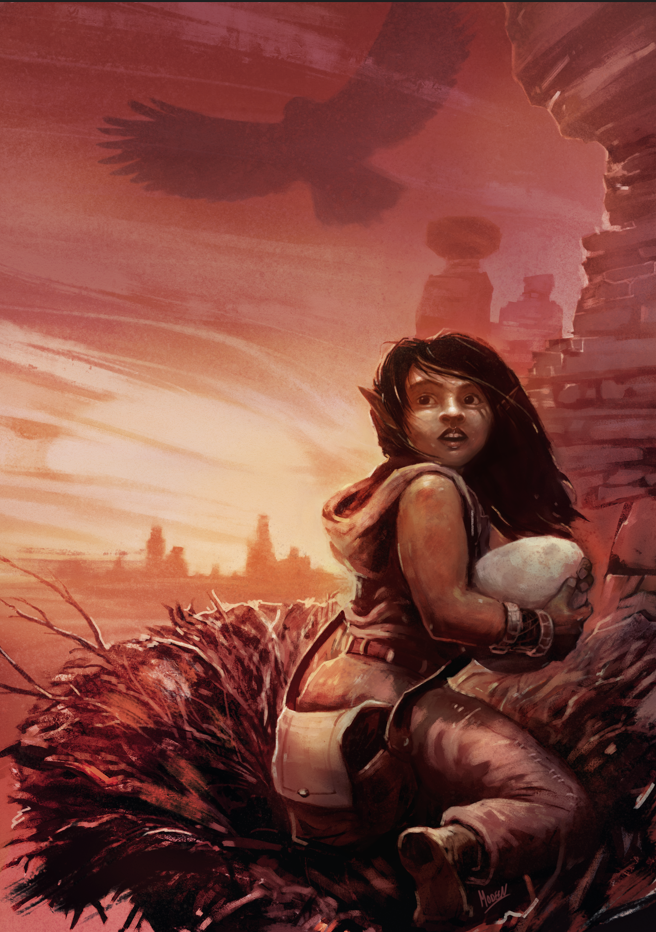
Banu al-Rīḥ must prove their mettle by taming the desert’s Great Rocs and forging bonds with the mythic birds. Their bonds are unique and powerful, honoring the tribe’s connection to the desert.
Your authority with the desert does not come from walls and fortification. Rather, trust. The Children of the Wind rely on one another to survive the harsh desert and protect it from factions who carelessly harvest its magical resources.
The desert is dangerous, and a traveler who ignores it learns quickly how small they are. The Banu al-Rīḥ honor their obligations to their home and their traditions and live symbiotically with the desert.
You do not give your trust easily. Others must prove themselves worthy of it. Surviving the desert is no simple feat. One you cannot manage alone. They move in tight knit communities built on the foundation of trust.
They pass oral traditions between each other and other kinfolk from Aporia in the Rukn al-Sama, or Pillar of the Sky, a mountain fortress carved by the giants during the Rebellion War. The young are tasked with climbing the great stone steps as a trial. It serves as much more than a communal home to the tribe. It’s their legacy.
The Banu al-Rīḥ are patient, they do not take what the land does not offer, and they never forget who stands beside them.
Others look at the desert and see danger. But you see a home. A path worth walking.
Art by Mikael Modeen
Banu Asrar
People are told that justice is found in courts. You know that justice only exists where someone is willing to defend it.
Zahra's institutions are powerful, but they do not always favor the common folk. Its councils and courts are orderly and respected, yet fallible. There are moments throughout the city where justice is owed yet not given.
The Banu Asrar pledges itself to those who understand that laws do not always equate to justice. You seek to restore the balance by your own hands.
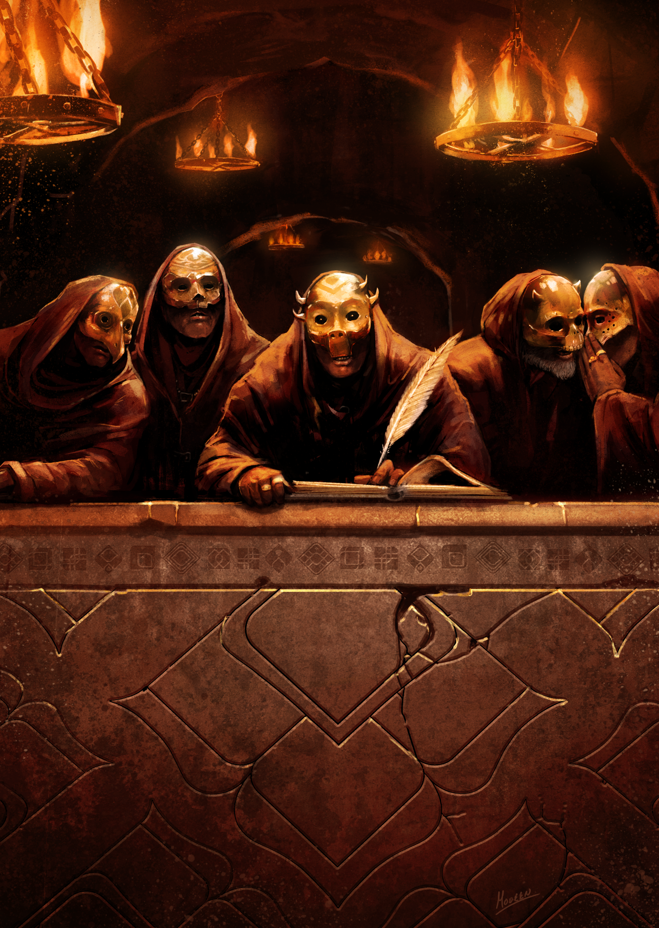
Within the organization is a tribunal dedicated to enacting retribution. Anyone in Zahra can petition their council of masked judges and have justice turned in their favor.
The Banu Asrar is far more than a secretive tribunal. It's an organization of Zahra's criminals. Thieves, mercenaries, and assassins are some of the types of people operating under their banner.
In spite of the criminals working alongside them, there is an unspoken agreement not to harm the vulnerable within the city. And for those who would wish to betray the Banu Asrar and speak about their involvement, they are bound through contract by glyphs tattooed into their skin. Secrecy and shadow are the Banu Asrar’s cloak against the forces who would aim to dismantle everything they’ve built.
Organizations and factions within the city have failed the impoverished and destitute time and time again and the Banu Asrar believe that justice needs to remain available.
The Banu Asrar protects the people of Zahrah, regardless of their creed. Their aim is to ensure the justice they enact through their tribunal is impactful, seen as a message to those who would take advantage of those they deem below them. Their decisions carry weight within the city, even if nobody knows who makes them.
You do not assume that fairness will happen because it should. You help to ensure that it does.
Art by Mikael Modeen
Baraqin
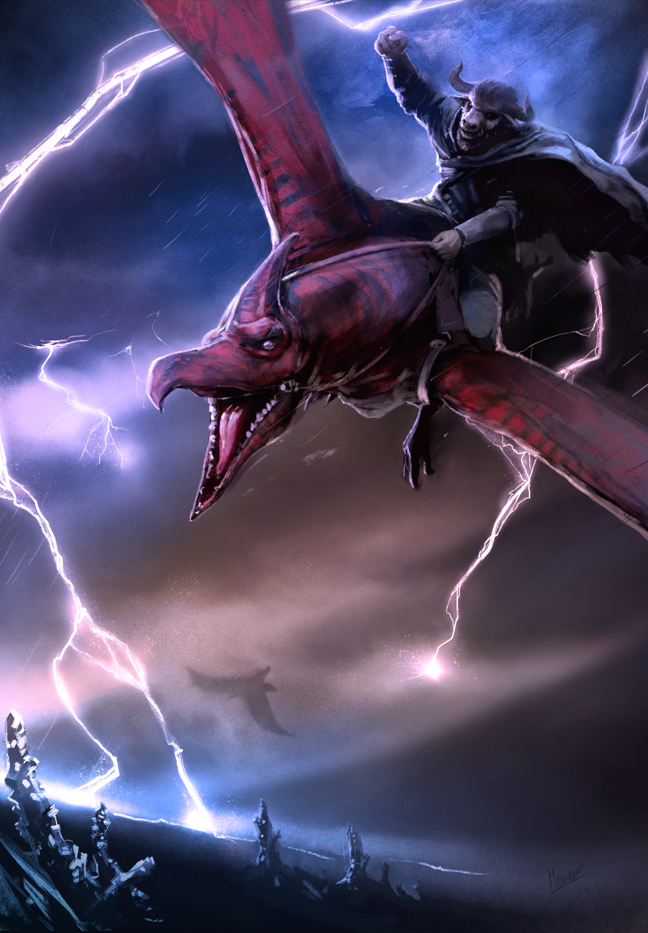
Most of Aporia fear the glyph-line storms while you ride toward them.
The Baraqīn, or People of Lightning, are a nomadic tribe that have a spiritual connection with the magical glyph-lines of the Barqiya Desert. They can read the storms forming above the skies of the desert like a map. They can sense where energy is gathering beneath the sand. They understand that lightning does not fall at random, rather it gathers where power is accumulated.
In the heart of these storms, fulgurite is made. They are shards of glass created by the magical lightning striking the desert sand. It's used as the currency of Aporia and harvesting it gives the Baraqīn Zahra within the city as well as the desert.
They ride fearlessly into storms, but do not mistake that for recklessness. Their actions are fueled by generations of tradition and practice that drive every movement they make within the storms. To them, the storms are not an obstacle. They're a teacher. With every storm they enter to obtain the glass fulgurite shards they gain status within their tribe.
Their storm chasing rituals are integral to the lives of their tribe. They value bravery and independence, often undergoing trials amid the storms to ascend the ranks of leadership. At their core, they are fearless and prize daringness.
Others might seek to survive the stormlands by avoiding them. But you do not survive them, you live amidst the storms.
Art by Mikael Modeen
Circle of a Thousand Threads
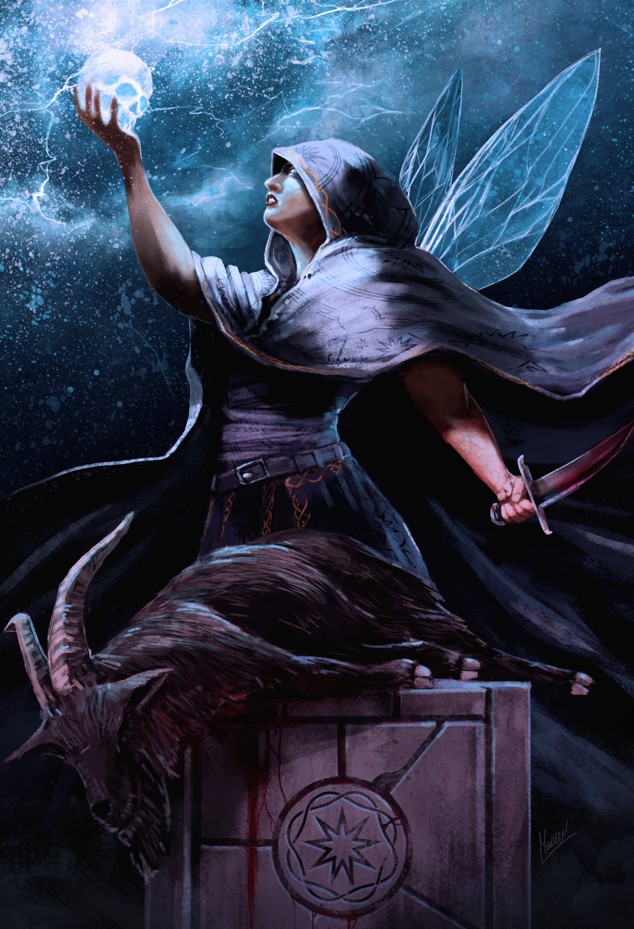
You know that every event, conversation, and conspiracy within the world is predetermined. Threads invisible to others are visible to you. You see the weave, the threads binding us to our destiny.
How would you use that information to change the pattern?
The Circle of a Thousand Threads understands the world is made up of interconnected threads weaving us together on a cosmic loom. What most believe are isolated moments are actually a tapestry of relationships, symbols, promises, histories, and choices that span generations. There’s a hidden structure to the universe only understandable by those within the Circle.
You are drawn to patterns that stretch far beyond a single lifetime.
The Circle studies the strands, tracing the consequences of every action to predict outcomes. They watch, ever observant to any shift within the strands, to sense where reality might shift direction.
While they understand fate is threaded, they do not believe it is fixed. The world as they understand it is constantly being written. And what has been written can always be rewritten.
Every choice we make weaves a new pattern. Every vow upheld ties a knot to bind it while every forgotten truth unravels it.
You do not accept these events as inevitable. You seek to understand the threads of fate to help shape the world.
Members of the Circle are respected, moving quietly through the upper echelons of Zahra. They are advisors, interpreters, careful observers of fate’s turning points that most don’t notice until it’s too late.
No other institution understands how important a single action might be.
Others might react to an event. You will be the one to reshape the future.
Art by Mikael Modeen
Dar Alnahr
The Nahj al-Rumuz might be a river to most of Zahra, but you know that it’s a lifeline.
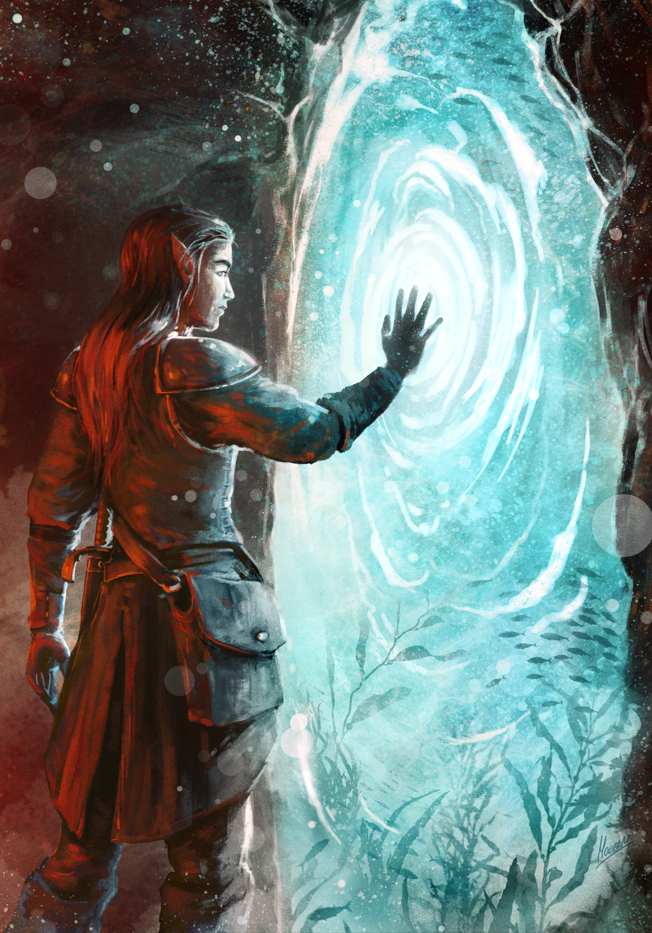
The Dar al-Nahr, the House of the River, controls the river. They understand that Zahra is only able to thrive because the river runs through it. Without its currents, Zahra would crumble. Caravans traveling the desert and tribes who use it to guide them through the sandy terrain would be decimated if not for the Nahj al-Rumuz’s bounty.
Scholars might study the universe in the hopes of reshaping it and courts might make laws to sustain it, but neither would endure should the river fall.
Most believe the House of the River is focused on taxation, monitoring the movement of goods on the river. But that is an ignorant view. They protect it. They know that every good moving in and out of Zahra strengthens it. They are the first to know when the river is at risk and are quick to take action to defend it.
Every interruption in the river threatens the rhythm that keeps Zahra alive and you are the steward that maintains it.
The House of the River maintains routes others depend on. They monitor crossings, protect shipments, and ensure that agreements made upstream are honored downstream. Their actions often go unnoticed due to their lack of glamour, but survival is often based on the unseen.
Trade is your specialty. You know how to negotiate and uphold deals with people you might never meet. It creates an invisible bond that you would never dare break.
The Dar al-Nahr have docks, warehouses, and hidden chambers along the river they use to track currents and shipments. They’re often the first to know if a deal goes awry and if a disruption in the river is deliberate or not.
To most in Zahra, the city is protected by towering walls and stone. But you know that the city lives and dies with the river.
Art by Mikael Modeen
Zahra stands because of its workers.
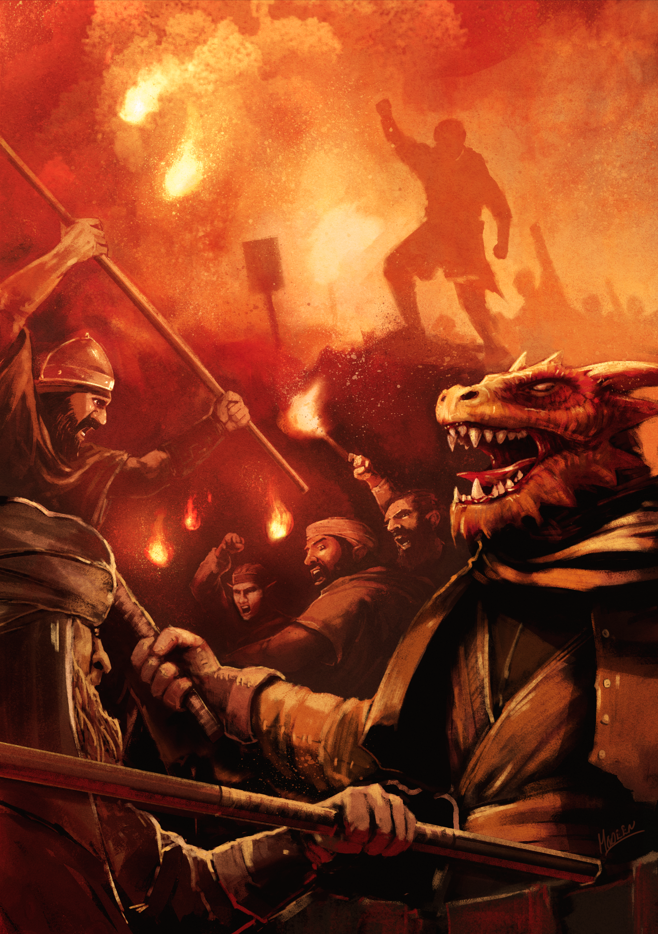
The Dwarven Labor Union is for those who understand that stability is reinforced daily by the hands of the workers. The very hands that built the walls that protect the city maintain its infrastructure and you strive to ensure they’re protected.
You stand steadfast against those who would take advantage of employees. With collective strength, organization, and a willingness to fight the powers that be, you believe you can accomplish anything.
Members of the Dwarven Labor Union believe that work is just a means of survival, rather it is a way of finding belonging. Nobody survives in Aporia’s ever changing world alone and the refugees who seek solace within the walls are trained and brought into the rhythms of meaningful labor as quickly as possible. The Union aims to see them build new lives for themselves and make Zahra their homes.
To many, the Union seems to be in opposition to the city. In reality, they only want the city to remember who built it.
Members maintain Rest Halls where workers can gather and support one another. This is where training is organized so newcomers can stand alongside skilled workers rather than rely on charity. Within the Rest Halls, members can share food, recover from injuries, and organize city wide worker protests to fight for their rights.
As a rule, the Union believes a city should not be measured by its monuments, rather how the hands that built them are treated.
Solidarity does not need to be loud, but the Dwarven Labor Union does not fear spectacle. An average day looks like cooperation and care that prevents a crisis before it begins. But when the stress compounds, the Union is ready to take action.
While others look toward Zahra’s future, you help make sure the people responsible for building that future are cared for.
Dwarven Labor Union
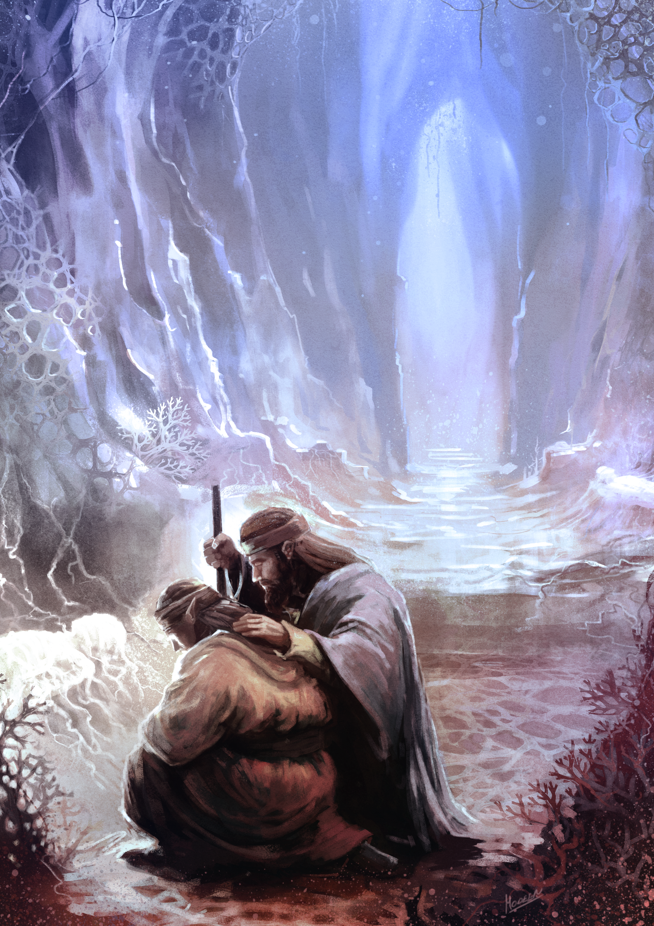
Gardeners of the Mycelial Memories
The rest of Aporia believes memories reside in one’s mind. Solitary until shared with another. But you know the truth: memory can belong to everyone.
The Gardeners of the Mycelial Memories know that memory does not have to fade. It need not be forgotten when death claims us.
Gardeners tend Aporia’s mycelial gardens, caring for the large sentient mycelium where the histories of the city, its people, and the world are remembered daily. It’s a job they do with care. Yet more importantly, the Gardeners witness.
They believe that, in an unraveling Aporia where memories are lost by the moment, the most important thing they can do is remember. Memories of dying civilizations and cultures must be protected to learn from them.
They travel with expedition companies, alongside caravans, river boats, and on foot as their influence stretches to the far ends of Aporia. They are drawn to stories that might be lost without their intervention.
They listen to elders, refugees, and the sick and dying. They behold the details of happiness, tragedy, and war with their own eyes knowing that they will one day return those experiences to the garden. When they die and are laid to rest in a mycelial garden, the mycelium absorbs the memories of the gardener.
You believe that knowledge and memory are living, breathing things that should not be hoarded and sealed away in vaults. The memories shared through the mycelial network could save a life, prevent catastrophe, and guide someone along the right path. Any life, regardless of creed within the world, is worthy of remembering long after death.
Collecting stories is not based on curiosity, but responsibility.
Others might record history, skewing the documents in favor of their own design. But you help the truth remain.
Art by Mikael Modeen
Art by Mikael Modeen
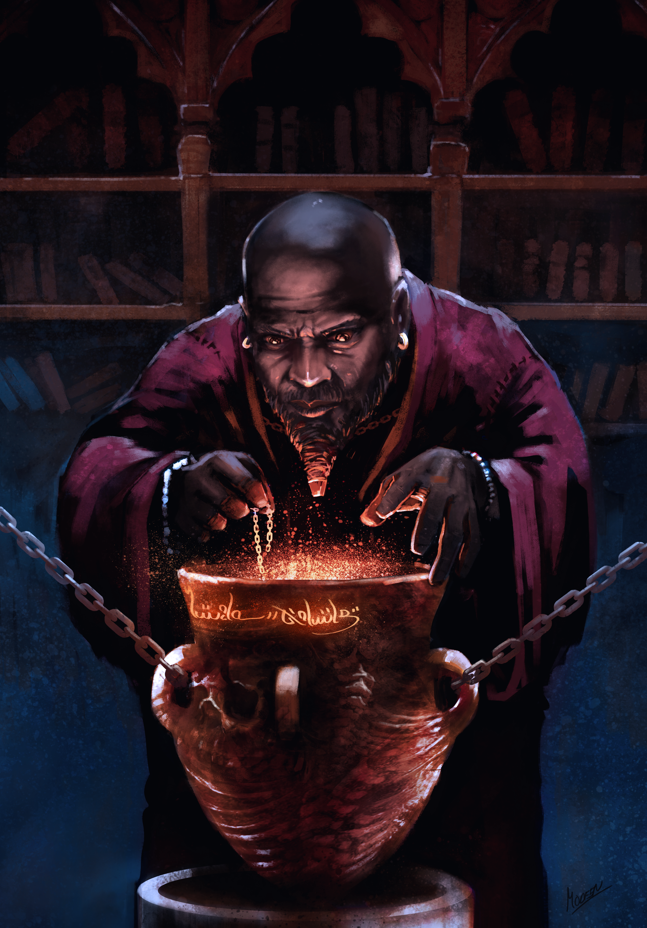
Guardians of the Vault
You know that knowledge is power. In the wrong hands it can lead to our own undoing. Many believe knowledge should be shared equally, but in times as unsteady as they are, you ask what it might destroy.
Zahra stands steadfast in the realm because generations before you chose caution over curiosity. The Guardians of the Vault follow that ethos. They understand that every new discovery needs time to be vetted and assessed, they need not be shared widely until all information is uncovered.
It might not garner them many allies within the city, but it’s a responsibility they’re drawn to.
Relics are not collected for notoriety and renown. They are not hoarded out of fear. The Vault secures relics because they know the power the arcane can have over mortals. Some may change a person when touched, others might slowly corrupt an individual, and there are few rare artifacts that alter the balance of the world.
Only the members of the Guardians of the Vault have the discipline to seal these relics away, keeping the door closed for good.
You may ask who should have the right to decide what is safe to know and what should be sealed. The Guardians do not waste time arguing. They accept the burden of responsibility themselves.
Relics are brought to them through expeditions, being sourced by new refugees in the city searching for fulgurite to start their new lives. The Guardians catalog every new relic, restrict dangerous information that must not spread, and study what cannot yet be trusted.
Your work requires diligence that few recognize and judgement most wouldn’t be able to carry. Defending the decision to keep the vault sealed is more difficult than celebrating a new discovery and most wouldn’t be able to restrain themselves.
The Vault sees restraint as protection.
The Guardians move quietly through the Grand Library. They monitor objects that cannot circulate freely, maintain records, explain why certain doors must remain closed, and ensure that dangerous knowledge is met with precaution rather than excitement.
Some truths must remain hidden. You help decide which.
Art by Mikael Modeen
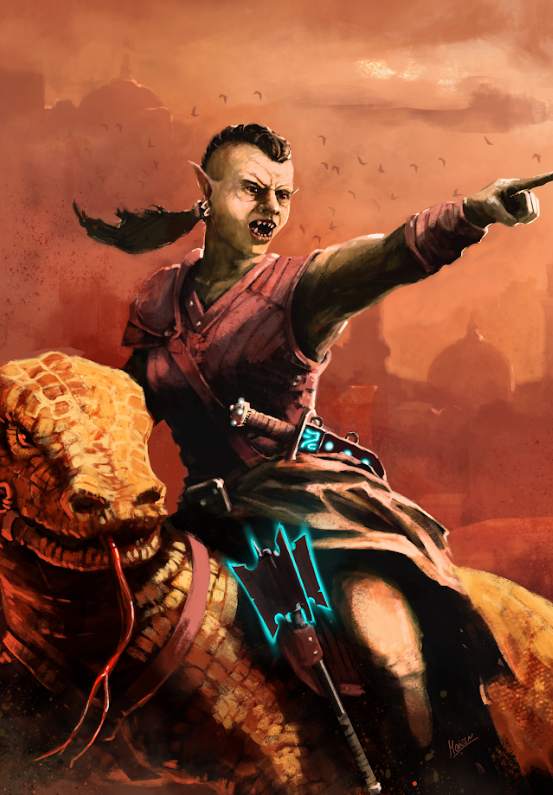
Zahra was not built on caution. It was crafted by those willing to grab ahold of powerful tools and learn to use them before someone else could.
Some believe that dangerous relics should remain untouched, locked away in vaults to be forgotten by the common folk. But you know they must be understood. The world is running out of time and they might just contain the secrets needed to breathe life back into Aporia.
The Hammerbound is a People for those who understand that problems aren’t always solved from a distance through limiting books. They seek to learn what they can of relics locked away in the past to see how they might be used now.
Studying dangerous relics is not an act of carelessness. Rather, they believe that untested knowledge does not protect anyone. If Zahra is to endure this unravelling world, you must learn how to use what earlier generations feared.
Containing artifacts does not help anyone. Preparation and education does.
The Hammerbound don’t view relics as threats like other Peoples might. They see tools left behind that helped shape Aporia into what it is. By understanding their creation and purpose, they might use them to fix what has been broken as Aporia grows more unstable by the moment.
If no one learns how they function, Zahra will face those dangers unarmed.
You’ve been told that some knowledge is forbidden, but you ask whether or not it might serve a new purpose.
Members of the Hammerbound are cautious and diligent, working closely with scholars, engineers, and expedition teams who all understand the risks they invoke. The Hammerbound see threats in the horizon others deem too far away. Relics are tested under controlled conditions to determine safe methods of using them to fight against those threats.
Preserving Aporia’s history is what most seem to care about. But you know that the past influences the future and you believe we must be prepared.
Hammerbound
Art by Mikael Modeen
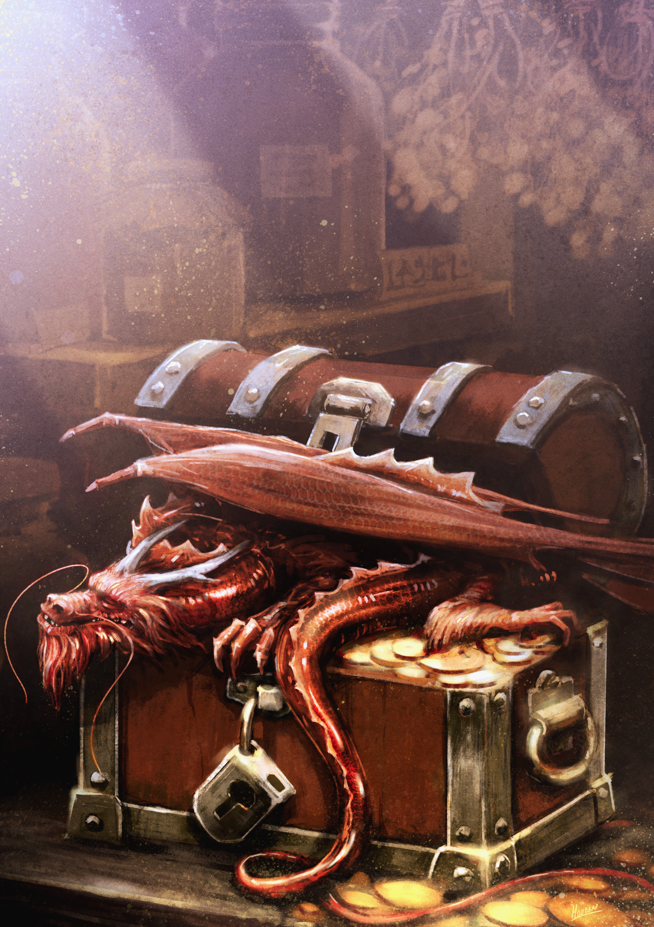
Hoardkeepers
When most think of a hoard, they imagine fulgurite shards and treasures. But you see it as much more than that. Information is often more valuable than anything.
The Hoardkeepers understand that Zahra's most valuable resource is not traded along the Nahj al-Rumuz and brought into the city through expeditions. It moves seamlessly through conversations, contracts, markets, and secret exchanges that influence decisions long before others realize they've been made.
The Hoardkeepers seek information that others overlook.
Members of the Hoardkeepers maintain extensive informational networks through their Sūq al-ʿItrs, or spice markets. What might seem like a bustling market on any day is trading in far more than saffron. The Hoardkeepers listen, gathering information by the hour. They remember what merchants carelessly whisper, they hear talk of council decisions that have yet to be announced, and they always know what expeditions are being sent where.
For the right price, that information can be shared. It's up to the buyer to decide what they want to do with it.
The Hoardkeepers don't view secrets as trophies of their observations. They see them as tools, a means to an end. It gives them power in a city that would otherwise see them powerless.
Though they have vast and valuable information, they understand that trust is important. They do not give their intel away without caution. They understand that trade breeds trust and only through trust do they have access to information.
Knowledge is not something to display, rather something to steward carefully.
Despite their trade involving secrets, they do not intend to use them to control people. They see it as a means to keep their community prepared for what's to come. With their information, they can warn caravans about dangerous elements in the desert before they depart, potentially saving lives. They can prepare for decisions that will affect the market, and they always know when trouble is a foot.
Coin is valuable, but you believe your greatest strength lies in knowing what happens next before anyone else does.
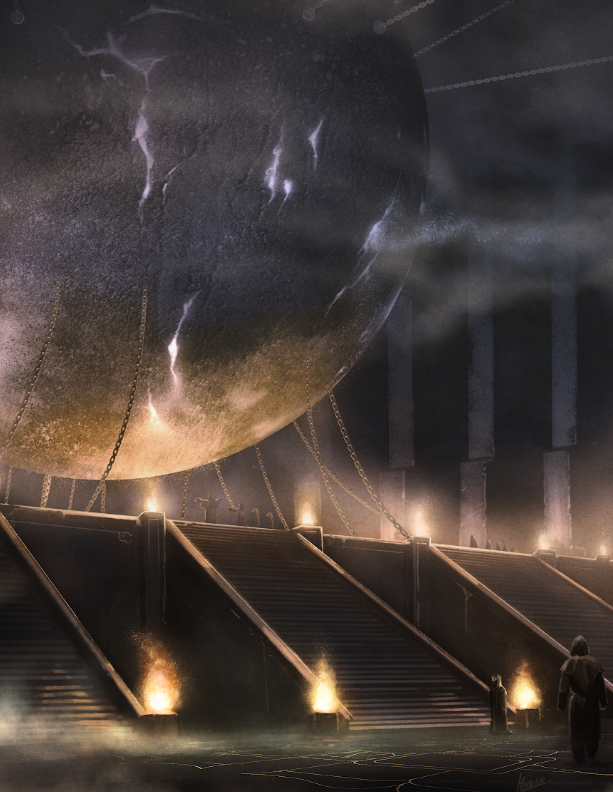
Art by Mikael Modeen
Hollowed
Names carry weight in Zahra and the Hollowed know how dangerous that is.
The Hollowed understand that fame and reverence are not harmless. There is no neutrality in gaining Renown. To them, fame resembles the old gods and their parasitic relationship with Kinfolk before the Rebellion War. They fed on glory, worship, and being adored. So when a leader in the city gains considerable commendations, they worry about what might come. The more renowned a hero carries, the more weight gathers around them after death and the ordinary cannot live freely under those shadows.
They believe that powerful people do not fade away after they're called to death. They linger in the realm, shaping the world in ways most fail to recognize. Some become presences that demand loyalty and respect and some can bend collective memory to their will. They view idolizing these people as dangerous.
Members of the Hollowed fight against this by rejecting their names. They are drawn to what remains when reputation is stripped away.
They take responsibility seriously. Doing good should strengthen the world, not bolster those who do it. Acts of kindness and generosity do not need recognition. They help wherever it is needed and often step away before gratitude is offered.
The Hollowed walk a quiet path. They repair what has been broken and protect those who cannot protect themselves. They don't ask for recognition or thanks and they refuse any titles that would turn their aid into something dangerous.
You move quietly through and beyond Zahra, supporting communities without placing yourself in the center. You ask questions about leaders and heroes who gain too many honors and you intervene when admiration is valued more than judgment.
You believe that the world is safer when goodness is shared and not concentrated on a single figure.
In an unraveling world, most are fighting to be remembered. You fight to make sure it's safe to be forgotten.
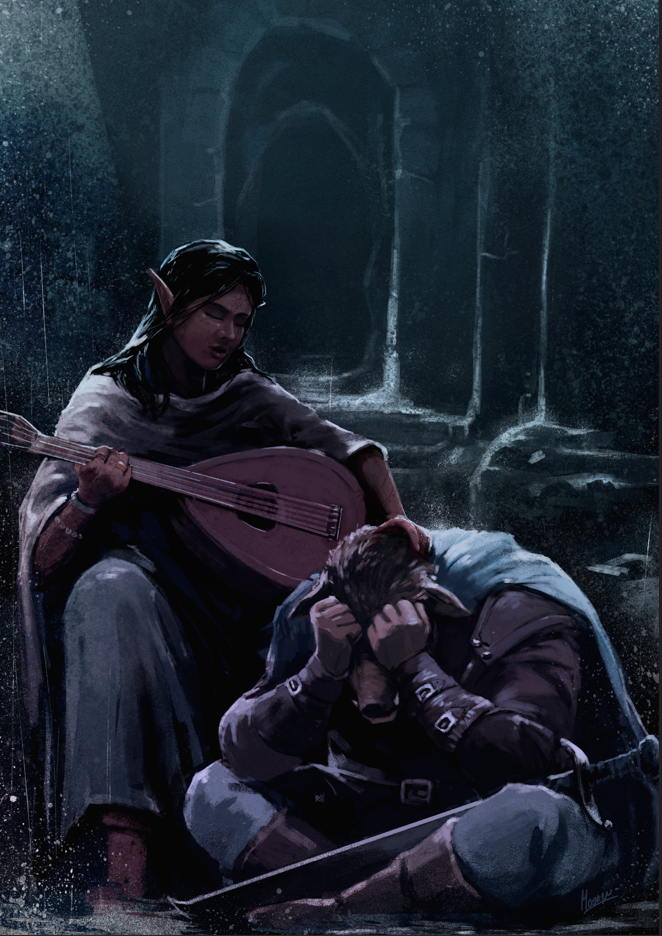
Art by Mikael Modeen
Illuminated Petal
Most see the power of the world in armies, laws, and secrets. But art and meaning are just as influential.
The Illuminated Petal understands that power begins in stories. They’re an organization of bards, musicians, and philosophers that spread through the ranks of Zahra seamlessly. They watch historical events unfold around them and craft narratives to share with the masses.
Gathered around the Petaled Stage in the heart of the city, hundreds of onlookers gather to watch plays, musical performances, and even watch political displays.
Members of the Illuminated Petal are drawn to intense moments where they sense the crowd's mood shifting. They can take a real life tragedy and reshape it into a riveting performance that reminds the viewers of everything they stand to lose.
Other Peoples might fight to preserve knowledge, but you interpret it. You take that knowledge and you share it with crowds, using it to bend them to your whim. You can shape how the world is understood through your art.
You have the power to decide what Zahra should look like and influence others to believe you.
The Illuminated Petal does not rule Zahra in any official capacity. But it does teach Zahra what ruling looks like.
Members of the Illuminated Petal move between the poor and destitute all the way up to the upper echelons of the city with ease. They're not just seen as entertainers, but advisors. The leaders of the city look to them for guidance on how to get their message across. More importantly, members of the Illuminated Petal can use their skills to sway the leaders' decisions.
The Illuminated Petal believes that influence does not need to be loud. It doesn't have to be bought or controlled through force. They believe that stories are at the heart of what every individual believes about themselves.
If they can touch another's heart, their influence is far greater than most would expect.
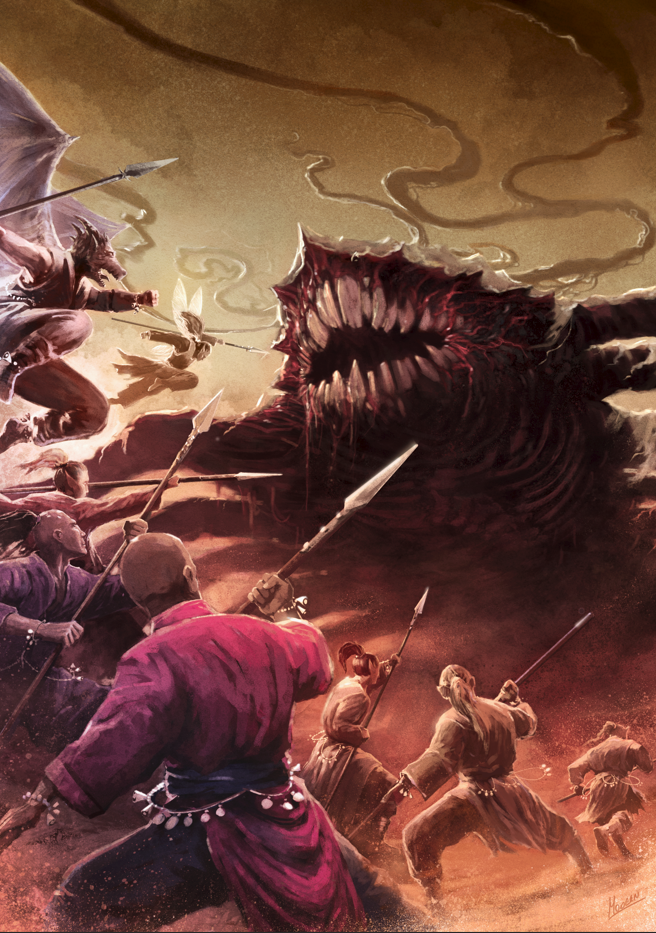
Art by Mikael Modeen
Kinship of the Chimes of Harmony
Most people might equate strength and control, but you know that strength is learning to live with everything you carry.
The Kinship of the Chimes of Harmony believes that surviving this ever-changing world begins in the mind. What is the cost of enduring if it frays everyone's mind along the way? By finding ways to remain steady in the midst of turmoil, Zahra will last.
The balance you hold within yourself is practiced, not given freely.
Members of the Kinship train diligently through movement, breathing rituals, discipline, and care. The three tenants of their beliefs are finding inner peace, balancing that with physical prowess, and reconciling with the loss of the Giants. Members keep small chimes attached to their joints that produce soft music with every step. They use this to train together, sensing timing and direction. They find harmony through the rhythm and move with a coordination that feels almost impossible.
The Kinship believes that any conflict leaves an echo within the body. Winning an argument does not mean that echo vanishes. It must be processed and worked through to be dealt with so individuals can live harmoniously with themselves and the rest of Zahra.
Through training, they create a rhythm that they use to remain present and ground themselves in an unstable world. They do not use this to ignore what they've endured, rather they learn how to move with it.
Members of the Kinship serve their communities willingly. They help when disaster strikes and teach people how to recover afterward. Where there was once chaos, they ensure there is structure and harmony in its wake.
Others might deem it easier to run away from their scars, but you know that you can live in harmony with them.
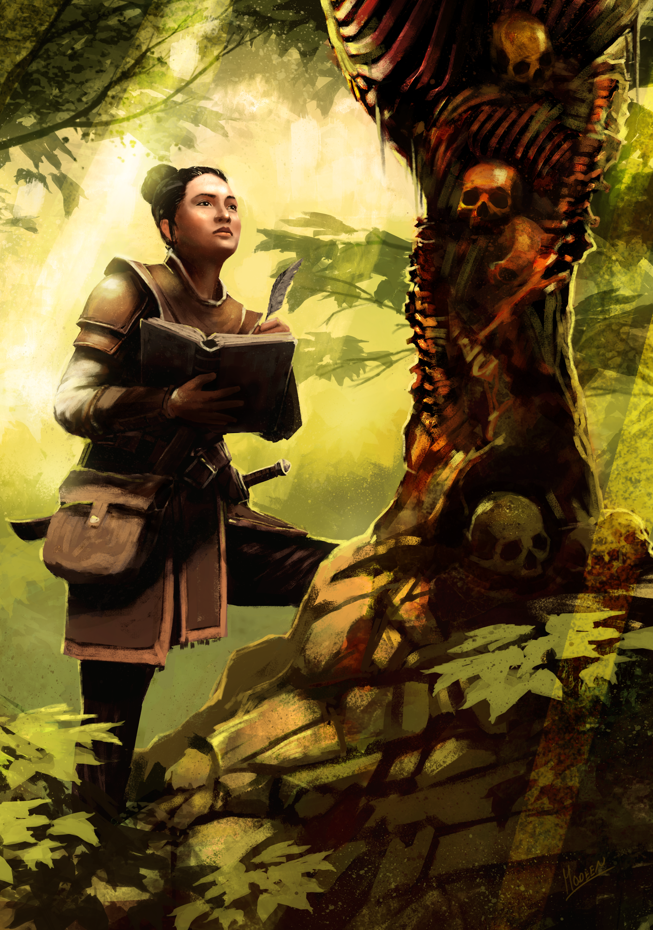
Art by Mikael Modeen
Royal Society of Zahra
Mystery is at the core of Aporia. Nobody knows the exact cause of the unraveling that claims new lands each day. But the Royal Society of Zahra questions what causes it.
The Royal Society is an organization for those who refuse to let go of the world without understanding how it works. What others might perceive as omens and miracles, the Royal Society sees as patterns and mechanisms built into the fabric of reality. By understanding the means of creation, perhaps they can offer hypotheses on how to repair it.
Members of the Royal Society of Zahra are naturalists, astronomers, physicians, engineers, and grammaturgists. All highly intellectual, skilled individuals who have dedicated their lives to the pursuit of knowledge. But knowledge is not simply an accolade for members of the Society, it's an infrastructure to be used to build a future for the city.
While their headquarters, the Orrery of Insight, is captivating in its own right, they do not merely sit indoors and read books. They travel into collapsing regions and catalog the details, finding unstable artifacts and attempting to learn their purpose. They study the storms that plague the desert and seek to understand the machinations of Aporia’s magic.
They do this because somebody must. Without understanding what is happening to Aporia, there is no hope to save it.
You are erudite and only believe in the empirical. You do not mistake rumor as fact, you need evidence and proof. You do not accept what authority tells you without questioning the knowledge behind it.
Knowledge is not pursued for prestige alone. The pursuit of knowledge is collaborative, shared between members of the Royal Society to be built upon and expanded. You understand that every discipline impacts another, and being well-versed is imperative to understanding.
Every piece of knowledge matters. Every record matters. Every expedition matters.
Ruwad al-Mahjur
Some believe that there is knowledge in this world that should remain buried. You believe that buried knowledge is still shaping this world.
The Ruwad al-Mahjur, the Pathfinders of the Abandoned, understand that the most dangerous forces in Aporia are not the ones people study openly. They are the forces that have been sealed away and forgotten, declared forbidden and left to rot in vaults and decimated lands. Generations have passed and now people don't understand why they were hidden to begin with.
They're drawn to the questions they've long been told not to ask.
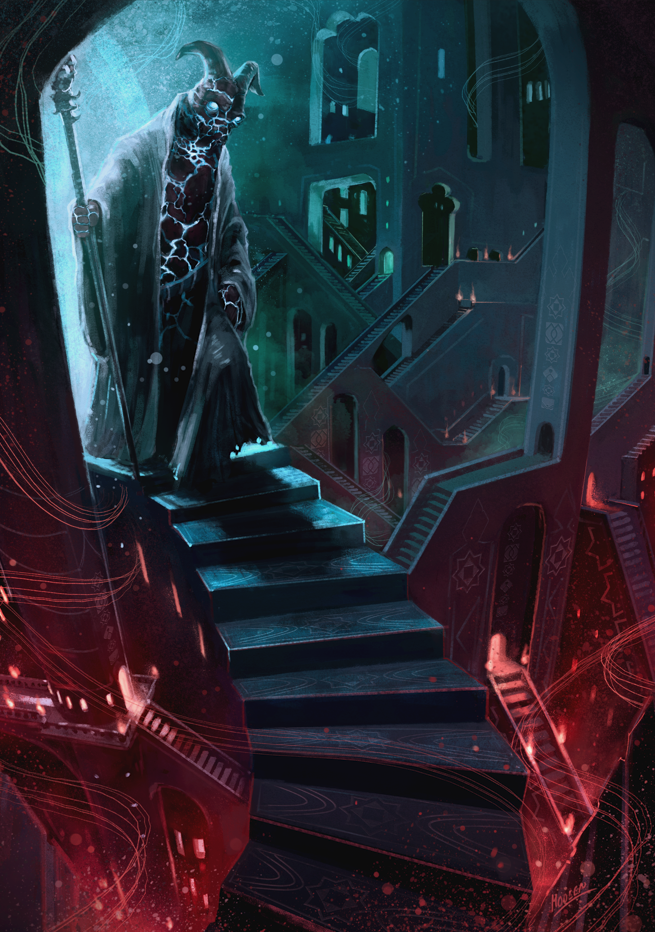
The Ruwad al-Mahjur see an enemy greater than the Giants in the wake of the Rebellion War. The Old Gods are prominent throughout Aporia. They’re a mirror of the old servitude they held to the Giants in a tempting new form.
They seek to break the new chains that bind them through access to forbidden and dangerous knowledge.
Members of the Ruwad al-Mahjur study relic practices and forbidden elements of grammaturgy. They see the fingerprints left through early attempts to reshape the structure of the world and they examine why those attempts failed. They see the consequences of knowledge that earlier generations feared and they would pursue it once more.
They do this because they know the forces did not disappear when they were forbidden. They remained. Without understanding them, there is no hope to control them.
Refusing to study dangerous traditions does not make the world safer, it simply makes it harder to understand.
You question the danger that was being contained and do not avoid knowledge because it's unsettling.
Members of the Ruwad al-Mahjur move through restricted archives, collapsed sites, sealed chambers, and through regions of failed experiments. They study what their predecessors refused to complete and map how these abandoned practices still impact the world.
Others might wish to close the doors of the past, but you must learn why they were closed.
Art by Mikael Modeen
Art by Mikael Modeen
Stormshapers Collective
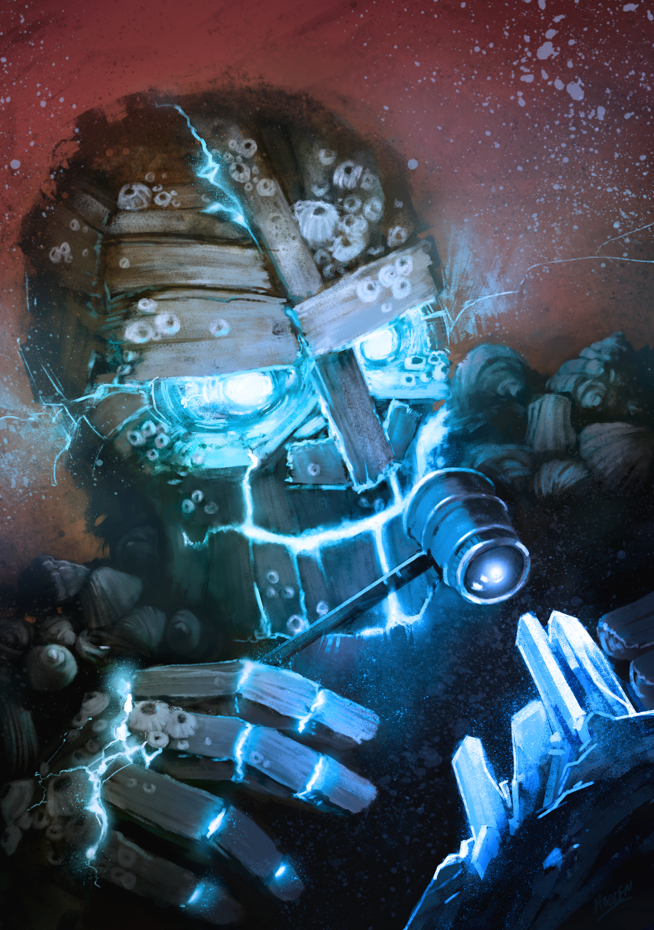
The storms ravaging the desert are a nightmare to most, but you see opportunity just waiting to be shaped.
The Stormshapers Collective believes that Zahra's future is dependent on learning how to work with the forces of the world. The fulgurite harvested from the Barqiya Desert is far more than a curio. It's the foundation that trade is built upon within the city and you carry the responsibility of shaping them wisely.
Your work turns raw power into something useful and that creates a strong sense of pride within you.
The Stormshapers Collective purchases fulgurite rings from desert tribes, refining them into the beautiful lightning-born glass that is passed between hands in the city daily. Instead of gold, they craft tools and instruments of beauty from the glass, all still containing concentrated energy from the storms.
They take what the storms left behind and create something new and powerful from it.
The Collective knows that the city survives through its infrastructure. Somebody has to fund it all. Walls and streets must be maintained, expeditions supplied, and workshops equipped. Most in Zahra value relics and knowledge above all else, but you believe the movement of resources is far more important.
Change arrives daily in Aporia, you don't simply wait around to see what comes. You help construct what will be next.
You understand that what is built today helps shape what others inherit tomorrow. That's not a responsibility you carry lightly.
Your influence grows everyday alongside your wealth. Other Peoples are wary of the power you've accumulated and wish to keep you down. You fight to secure your footing in a city whose power shifts daily.
Members of the Stormshapers Collective are engineers, financiers, smiths, expedition sponsors, and planners who believe that careful craft and careful investment can steady a changing world.
The storms are powerful and dangerous, but you help shape what they become.
Art by Mikael Modeen
Veiled Chamber
Most in Zahra wish to see the systems in place altered to benefit the majority. You know that the aristocracy must be protected.
The Veiled Chamber understands that a city doesn't survive because decisions are fair and popular. It survives because there are people in place to ensure that its foundations do not crumble under pressure. Others might chase new discoveries beyond the walls and argue about decisions publicly. But the Chamber watches, ready to tip the balance back in their favor should the need arise.
Members of the Veiled Chamber fight for their inheritance to remain. They understand the precedence and alliances built over generations and they maintain continuity. Institutions last longer than individuals, and it is their duty to preserve them.
When change comes, as it inevitably does, they ensure it does not arrive all at once.
They do not seek recognition for their work. The city being safe and following the guidelines left by successful rulers of the past is reward enough.
While information spreads quickly through Zahra's walls, influence has a way of moving faster. With a vault of information, they can manipulate how new knowledge moves through the city. Some truths may strengthen the city while others tear it apart. The Chamber decides how this information is used in their favor.
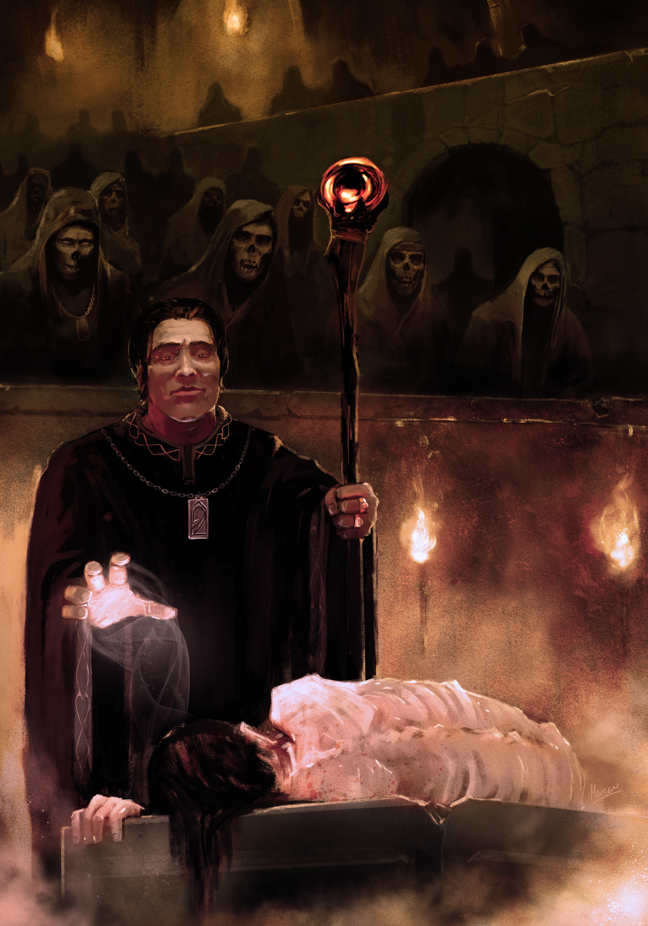
Beneath the city is a sprawling necropolis known as the Black Dias. There, hundreds of undead aristocrats kept alive through necromancy are housed. Members of the Chamber visit often to seek council with their ancestors, perform rituals, and offer sacrifices.
Your power is not always visible. Members of the Chamber don't often appear at the center of events. They work in archives, councils, and cautious conversations to prevent crises.
You understand that there must always be people willing to carry burdens no one will ever acknowledge. This silence is not confused as weakness, but the restraint is seen as strength.
Others try to force sudden reform, but you know what it will cost future generations. No matter what, you ensure Zahra remains.